

When we think about a nuclear power plant, attention usually stops at the reactor. A controlled chain reaction takes place in its core. Energy released by nuclear fission is converted into heat, which the plant systems use to generate electricity.
By the time fuel enters the reactor, it has already passed through a long industrial process. After use, it must be cooled, stored and prepared for further management. Depending on the chosen strategy, this may include reprocessing to recover some of the material for reuse or the direct final disposal of spent fuel.
The nuclear fuel cycle connects the preparation of fuel, its use in a reactor, and the management of the fuel and waste generated along the way. Understanding the cycle means following the material, the changes it undergoes, and the requirements for keeping it under control.
The pathway we will follow
Different reactor designs use different types of fuel. In this series, our reference pathway is fuel made from enriched uranium dioxide, UO₂, for light water reactors. These include pressurised water reactors (PWRs) and boiling water reactors (BWRs). The route involving material reuse is presented as a separate branch.

We will follow three kinds of change: the chemical form of uranium, its isotopic composition and the engineered form of the fuel. Each requires a distinct process. Uranium concentrate, enriched uranium and a fabricated fuel assembly therefore represent different material properties and different stages of preparation.
From deposit to uranium concentrate
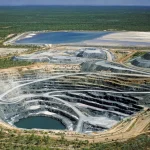
In open-pit or underground mining, uranium ore is extracted, crushed and processed to separate the uranium from most of the associated minerals. Where geological and hydrogeological conditions permit, uranium may instead be recovered by in situ leaching. In that process, uranium passes from the minerals into a solution, which is pumped to the surface and treated in a processing plant.
The product of this stage is uranium concentrate, commonly known as yellowcake. Its chemical composition and colour depend on the production process. The name therefore does not necessarily denote a yellow material or a single pure compound. U₃O₈ is a common uranium oxide form associated with this concentrate.
The concentrate is a feed material for further fuel preparation. Several chemical and manufacturing steps are still required before it becomes part of a fuel assembly.
Waste is also generated at this stage. Residues from processing mined ore contain radioactive products from uranium decay chains and other substances. They therefore require appropriate disposal, measures to prevent the spread of contamination, and long-term control. Responsibility for the material does not begin only when the fuel becomes spent.
Conversion and enrichment
Conversion prepares uranium in a chemical form suitable for the next stage. Along the pathway considered here, it includes purification and conversion of the concentrate into uranium hexafluoride, UF₆. This compound is suitable for isotopic separation in the gaseous phase. Conversion itself does not increase the proportion of uranium-235.
Enrichment increases the proportion of uranium-235 in the total uranium inventory. Natural uranium contains approximately 0.7 per cent by mass of this isotope. In conventional light water reactor fuel, the proportion is often about 3 to 5 per cent by mass, although the selected enrichment depends on the fuel design and its intended use. These percentages refer to the uranium, not to the total mass of the UF₆ or UO₂ compound.
Why is this necessary? In a light water reactor, water slows neutrons and thereby increases the probability of uranium-235 fission, but it also absorbs some neutrons. To sustain the chain reaction, a sufficient fraction of the released neutrons must cause further fissions. A conventional light water reactor using uranium fuel therefore requires a higher proportion of uranium-235 than natural uranium contains. The need for enrichment follows from the reactor design; it is not a universal requirement for all nuclear fuels.
Isotopic separation produces two material streams: enriched uranium, with a higher proportion of uranium-235, and depleted uranium, with a lower proportion of this isotope than natural uranium. Depleted uranium is a separate material stream that requires further management and accounting.
From chemical compound to fuel assembly
Enrichment is followed by reconversion: enriched UF₆ is converted into uranium dioxide, UO₂, powder. The powder is pressed into pellets, densified into a ceramic by sintering, and finished to the required dimensions.
The pellets are loaded into metal tubes, usually made of a zirconium alloy for conventional light water reactor fuel. The tubes are closed and sealed to form fuel rods. The rods are combined with structural and spacer components to form fuel assemblies.
The assembly geometry determines the arrangement of the fuel and the coolant flow paths. Its design must maintain the required position of the rods and ensure appropriate mechanical and thermal performance throughout its intended service. Fabrication therefore includes control of materials, dimensions and joint quality.
At this stage, the material has a defined isotopic composition, ceramic form and engineered configuration that allow it to be loaded into a reactor.
What changes during operation
In the core, some heavy nuclei undergo fission while neutron capture and radioactive decay also take place. The isotopic composition of the fuel changes progressively. Fission products and new heavy nuclides are formed, including plutonium isotopes. Some of the plutonium produced also undergoes fission during operation and contributes to the energy released.
Heat is transferred from the fuel to the coolant. In the power plant, a steam cycle drives a turbine and an electrical generator. At this point, the energy pathway separates from the fuel pathway, while the fuel remains in the core during operation.
Burnup is an important measure of fuel utilisation. For the uranium fuel considered here, it is the amount of thermal energy released per unit initial mass of uranium. It may be expressed, for example, in megawatt-days per kilogram of uranium (MWd/kgU), equivalently gigawatt-days per tonne of uranium (GWd/tU). The term does not describe chemical combustion.
Fuel is removed from service while it still contains substantial quantities of uranium. During operation, fissile material is consumed and fission products accumulate, including nuclides that absorb neutrons. The properties of the pellets and cladding also change. Decisions on further use must therefore consider the fuel composition, the required performance of the future core, and permitted thermal and mechanical loads. The remaining quantity of uranium alone does not determine whether a fuel assembly is suitable for another operating cycle.
In this series, the term spent fuel refers to irradiated fuel that has been permanently removed from the core and is not intended for further use in its existing form.
It still contains uranium and plutonium that can be reused after appropriate reprocessing.
Refuelling outages connect fuel management with plant operation
During routine refuelling of a light water reactor, part of the core is replaced with fresh fuel assemblies. Fuel intended for continued use remains in service for another operating cycle. The arrangement of the assemblies is defined by the core loading pattern and verified against operating limits and safety requirements.
Temporary removal of a fuel assembly from the core during an outage does not by itself mean that the assembly is spent. It may be scheduled for reinsertion. Descriptions of refuelling must therefore distinguish a temporary movement from permanent removal from service.
An outage requires coordination of refuelling, inspections, maintenance, testing and preparations for plant restart. As plant conditions change, the required safety functions must be maintained and the availability of systems monitored. The sequence of work and the effects of concurrent activities are important.
A dedicated article in this series will examine outages. It will show how a new core design is implemented and verified through refuelling operations, and how specialists from different disciplines coordinate work on the fuel and other plant systems.
Cooling continues after shutdown
After the self-sustaining chain reaction has been stopped, radioactive decay of nuclides in irradiated fuel continues to release energy. This produces decay heat. Its power generally decreases over time, but the heat must continue to be removed.
After removal from the core, fuel from the reactors considered here is initially stored in a pool. The water removes heat from the fuel and provides radiation shielding, while pool cooling systems reject the heat. The storage configuration and other design provisions maintain subcriticality, a condition in which a fission chain reaction cannot sustain itself. This does not mean that radioactive decay or the generation of decay heat has ceased.
After an appropriate cooling period, the fuel may be transferred to dry storage if it meets the acceptance criteria for the selected system. Important parameters include initial enrichment, burnup, cooling time, decay heat output and the physical condition of the fuel. Acceptability must be assessed against the authorised contents and loading method of the specific storage system.
Dry storage also requires heat removal. In many designs, this is achieved passively by conduction, thermal radiation and natural convection. The fundamental safety functions remain the maintenance of subcriticality, heat removal, confinement of radioactive material and radiation shielding.
Subsequent fuel pathways
In an open, or once-through, fuel cycle, spent fuel is prepared for direct final disposal after cooling and storage. Its constituents are not separated beforehand to fabricate new fuel. The term “direct” refers to the absence of reprocessing; the fuel still requires conditioning and suitable packaging.
In a route involving reprocessing and recycling, usable materials, principally uranium and plutonium, are separated from spent fuel. Their subsequent pathways differ. Recovered uranium may be used to produce new uranium fuel after additional treatment and, where necessary, re-enrichment. Plutonium may be used in mixed oxide fuel (MOX), which contains uranium dioxide and plutonium dioxide. Use of this fuel requires an appropriate design and authorisation for the specific reactor.
Reprocessing also generates radioactive waste. High-level waste streams are conditioned into forms suitable for further storage and disposal, for example by immobilisation in glass, in which radioactive substances are incorporated into a solid glass matrix. Wastes with different characteristics require different management methods.
The term closed fuel cycle denotes pathways in which material is recovered for further use. The options for additional recycling depend on isotopic composition, reprocessing technology and reactor type. A single recycle does not imply indefinite recycling of all material.
Storage and disposal serve different purposes
Storage is undertaken with the intention of retrieving the material for further management. Disposal places waste in an appropriate facility without the intention of retrieval. The distinction arises from the purpose and safety design of the facility, not merely from the duration of the period involved.
Deep geological disposal is envisaged for the long-term isolation of spent fuel and high-level waste from reprocessing.
Data and responsibilities accompany the material
Each fuel assembly is accompanied by data: its identity, composition, operating history, burnup, location and condition. These data are needed to plan its further use, movements and storage. Documentation therefore links individual stages into a traceable whole.
Along this pathway, we will distinguish three related fields:
- Nuclear safety and radiation safety address the control of radiation risks during normal operation, as well as the prevention of accidents and mitigation of their consequences.
- Nuclear security, which includes physical protection, addresses the prevention and detection of, and response to, theft, sabotage and other intentional unauthorised acts.
- International safeguards verification includes the measures by which the IAEA verifies whether States are fulfilling their obligations under safeguards agreements and whether nuclear material has been diverted from peaceful uses.
Nuclear material accountancy tracks quantities, composition and changes in inventories. In its verification activities, the IAEA also uses measurements and measures such as seals and surveillance cameras. Records and independent verification together help determine whether the actual status of material is consistent with declared information.
As we follow the fuel, we will therefore also consider which data must be known and who is responsible at each stage.
From ore to energy and subsequent management
The title “From Ore to Energy” describes the pathway to a useful outcome. The complete fuel cycle also includes management of the material after energy has been generated.
Before the reactor, processes determine the chemical form, isotopic composition and engineered configuration of the fuel. During operation, its composition and condition change. After use, its properties determine the requirements for cooling, storage, possible reprocessing and disposal.
This article is a map for the rest of the series. We will examine each stage in turn, together with its side streams, limitations and connections to other facilities.
The next article begins at the deposit: how uranium is recovered and converted into a concentrate for the next stages of its industrial pathway.
Terminology
The nuclear fuel cycle uses precisely defined technical terminology. The terms below appear in this article and help explain the processes and materials involved.
Separated part of a material stream (fraction)
A portion of material separated according to its composition or properties and handled separately in subsequent processing.
High-level waste (HLW): Radioactive waste that produces substantial decay heat or contains very large amounts of long-lived radionuclides requiring a high degree of containment and isolation. Deep geological disposal is the generally recognised disposal option.
Reprocessing: Chemical treatment of spent nuclear fuel to separate specified components, such as uranium and plutonium, for possible reuse.
Immobilisation: A process in which radioactive substances are incorporated into a stable form to limit their migration into the environment.
Vitrification: A process in which high-level radioactive material is incorporated into a stable glass matrix.
Image credits
Lead image: uranium concentrate (yellowcake), Energy Fuels Inc., via NRC / Wikimedia Commons, licensed under CC BY 2.0. The image was cropped and graphically adapted for use as the lead image.
The nuclear fuel cycle diagram was created by Elite Studio 3D / By the Protocol specifically for this article as a simplified conceptual representation of the principal stages and possible fuel pathways for light water reactors. Intermediate stages and side streams have been simplified. The diagram is not design or operating documentation for any specific facility.
References
IAEA. What is the nuclear fuel cycle? Definition and scope of the fuel cycle.
IAEA, iNFCIS. About Nuclear Fuel Cycle. Sections on uranium recovery, conversion, enrichment and fuel use.
U.S. NRC. Yellowcake. Meaning of the term and variability in the composition and colour of the concentrate.
U.S. EIA. The nuclear fuel cycle. Conversion, reconversion, fuel use and initial storage.
U.S. NRC. Uranium enrichment process. Meaning of enrichment and typical uranium-235 proportions in conventional fuel.
U.S. NRC. Fuel Fabrication. Fabrication of pellets, fuel rods and fuel assemblies.
IAEA. Core Management and Fuel Handling for Nuclear Power Plants. Safety Standards Series No. SSG-73, 2022. Chapters 2, 4, 5 and 9 on core planning, refuelling, irradiated fuel handling and records; in particular paragraphs 2.20, 2.65 and 2.66 on changes in fuel and constraints on its continued use.
ENSI. High burnup (definition). Burnup as energy per unit mass of fuel.
IAEA. IAEA Nuclear Safety and Security Glossary, 2022 (Interim) Edition. Entries for “spent fuel”, “storage”, “disposal” and “nuclear fuel cycle”, and explanations of “safety” and “security”.
IAEA. Maintenance, Testing, Surveillance and Inspection in Nuclear Power Plants. Safety Standards Series No. SSG-74, 2022. Section “Outage Management” in Chapter 5.
IAEA. Storage of Spent Nuclear Fuel. Safety Standards Series No. SSG-15 (Rev. 1), 2020; copy hosted by GRS. Paragraphs 6.1 to 6.4 and 6.118 to 6.119, and Appendix I on safety functions, fuel acceptance, and wet and dry storage.
IAEA. Options for Management of Spent Nuclear Fuel and Radioactive Waste for Countries Developing New Nuclear Power Programmes. Nuclear Energy Series No. NW-T-1.24 (Rev. 1), 2018. Chapters 3 and 4, in particular Section 4.2.2 on reprocessing and recycling in thermal reactors.
IAEA. Basics of IAEA Safeguards. Purpose of safeguards and their relationship to States’ safeguards agreements with the IAEA.
IAEA. IAEA Safeguards Glossary, 2022 Edition. International Nuclear Verification Series No. 3 (Rev. 1), 2022. Chapters 5, 6 and 7 on nuclear material accountancy, measurements, and containment and surveillance measures.
U.S. NRC. Uranium Mill Tailings. Uranium ore processing residues, their radioactivity and long-term management.
IAEA, Basic Professional Training Course. Module IV: Design of a Nuclear Reactor, May 2015, Section 1.1, p. 6. Role of the moderator and the relationship between reactor design and enrichment requirements.
conversion fuel assemblies fuel reprocessing light water reactors radioactive waste Spent Nuclear Fuel uranium uranium enrichment yellowcake
Last modified: October 17, 2026