


Boron, gadolinium, and the quiet material logic of reactor control
Not every important material in a nuclear reactor produces energy. Some materials matter because they define the conditions under which energy can be produced safely, predictably, and over time. Boron and gadolinium are two such materials.
They are not nuclear fuel. They are not visually dramatic. In sealed sample bottles, they may appear almost ordinary. But in reactor physics, both point toward one of the most important ideas in nuclear engineering: reactivity is not controlled by one component alone. It is shaped through materials, geometry, neutron interactions, fuel design, coolant chemistry, operating procedures, and time.
Reactivity is not a switch
A reactor is not simply “on” or “off”. At its core, reactor operation depends on the balance between neutron production, neutron absorption, neutron leakage, and time-dependent changes inside the fuel and the system.
Every fission event can release neutrons. Some of those neutrons may cause further fissions. Others are absorbed. Some leak out of the core. Some appear later through delayed neutron precursors.
Their behavior is affected by fuel temperature, moderator density, coolant conditions, fuel composition, core geometry, and control materials. This is why reactivity control is layered.
Control rods are one visible part of the story. They are important, but they are not the whole story. In a reactor, control is also chemical. It is material. It is spatial. And it is deeply time-dependent.
Boron and gadolinium show this very clearly.
Boron: chemistry with a nuclear effect
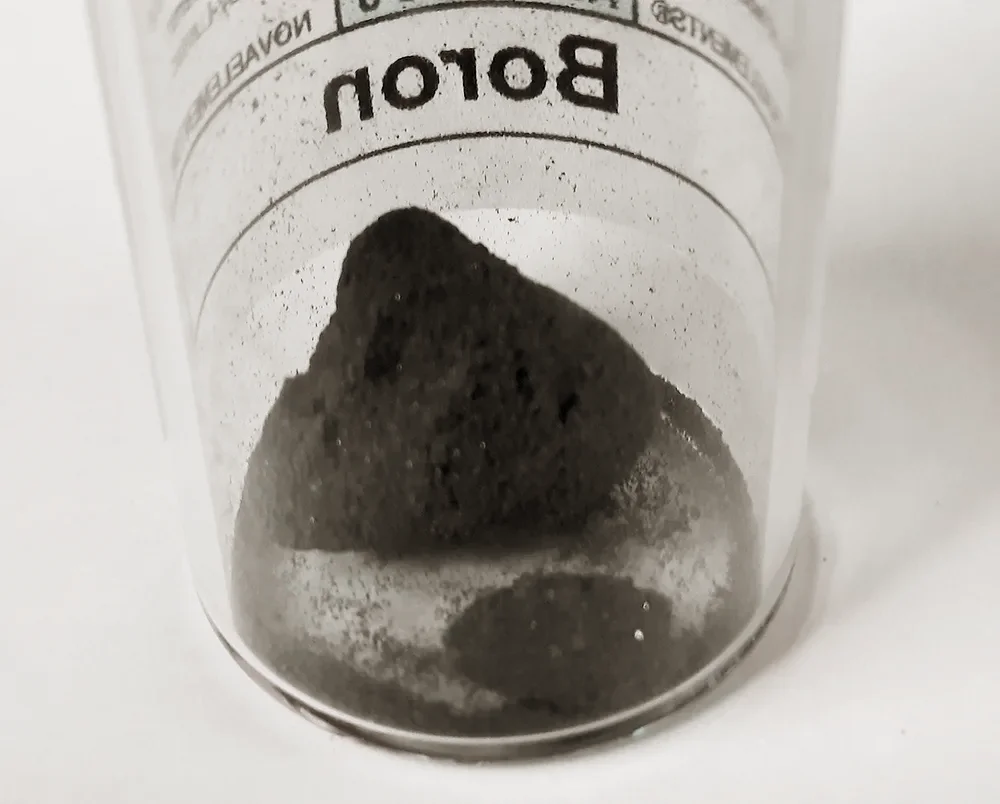
In many pressurized water reactors, boron is strongly associated with soluble reactivity control. It is not used as a loose material inside the reactor. It is introduced into the primary coolant in the form of boric acid, where boron acts as a neutron absorber. More precisely, the isotope boron-10 has a strong ability to absorb thermal neutrons.
By adjusting the boron concentration in the primary coolant, operators can influence the neutron economy of the core. This makes boron part of a slower, system-wide control mechanism.
It helps compensate for changes over the operating cycle, including fuel burnup and the gradual change in core reactivity. It supports long-term reactivity management, while faster control and shutdown functions are handled by other systems, including control rods and dedicated safety systems.
The important point is this: boron does not “control the reactor” alone. It is one layer in a broader control philosophy. It acts throughout the coolant volume. It interacts with neutron behavior. It belongs to the chemistry of the primary system, but its effect is nuclear.
That is what makes it so interesting. A chemical condition becomes part of the reactor’s neutron logic.
Gadolinium: absorption built into the fuel design
Gadolinium belongs to a different part of the story. In reactor fuel design, gadolinium is commonly associated with burnable absorbers. It is not normally used as a movable control device. In conventional fuel assemblies, gadolinium may be incorporated into selected fuel rods as gadolinium oxide mixed with uranium dioxide. These rods remain fuel rods, but their absorber content helps shape excess reactivity over the fuel cycle.
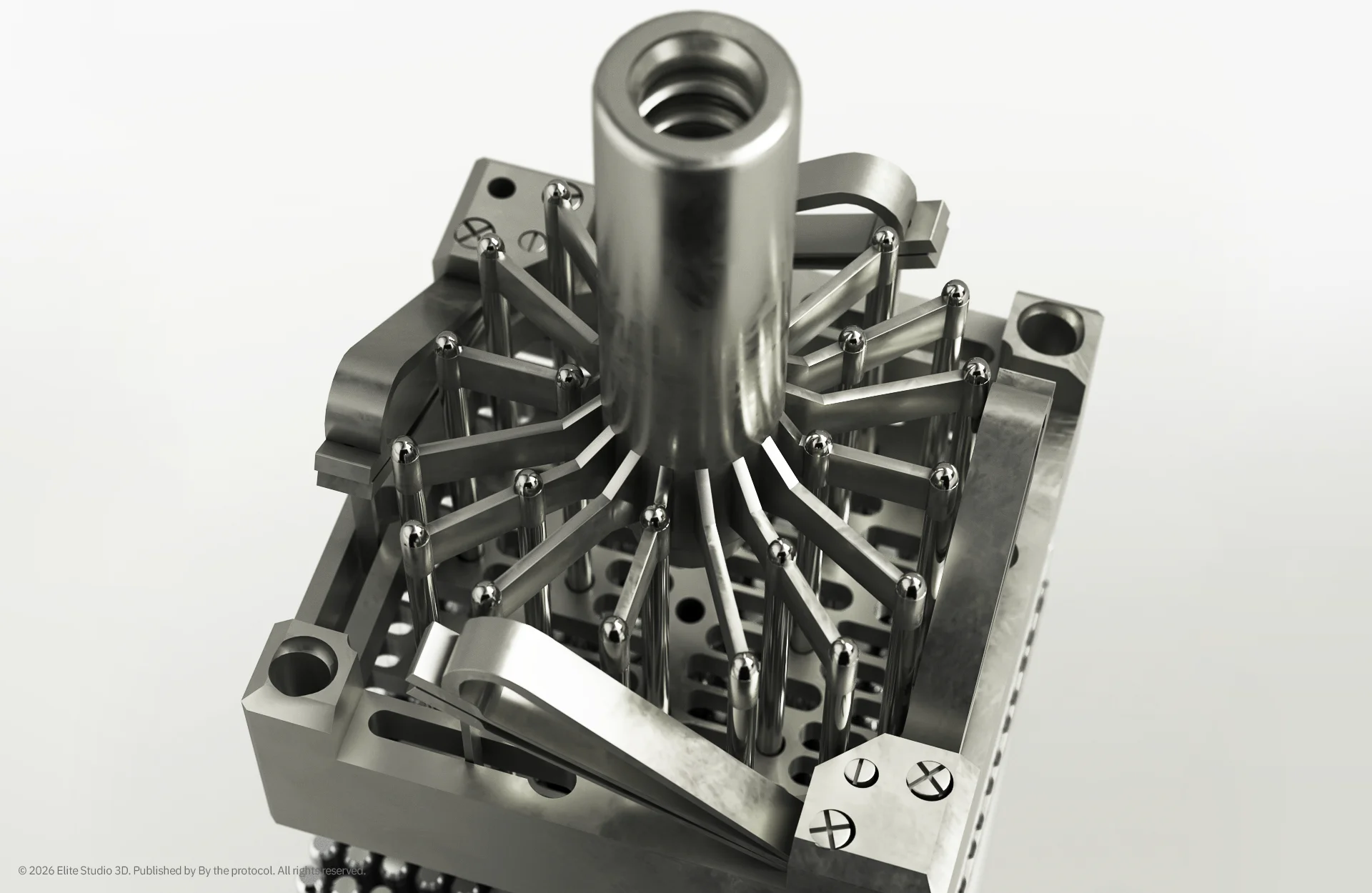
This places part of reactivity control inside the fuel before operation begins. At the beginning of the fuel cycle, gadolinium provides strong neutron absorption, helping to manage initial excess reactivity and influence power distribution within the core. As irradiation continues, gadolinium isotopes absorb neutrons and gradually lose their absorbing strength.
Its effect therefore changes with burnup. That is what makes gadolinium more than a neutron absorber. It is a time-shaping material.
Unlike a control rod, it is not inserted or withdrawn during operation. It does not act through movement or operator action. Its role is quieter and less visible: it helps shape how the core behaves over time through material logic embedded in the fuel design.
What absorption changes
When boron and gadolinium absorb neutrons, they do not simply “store” them. Neutron absorption changes the material at the nuclear level. For boron, the most important isotope is boron-10. When boron-10 absorbs a neutron, it mainly undergoes a nuclear reaction that produces lithium-7 and an alpha particle. In reactor terms, that neutron has been removed from the chain reaction.
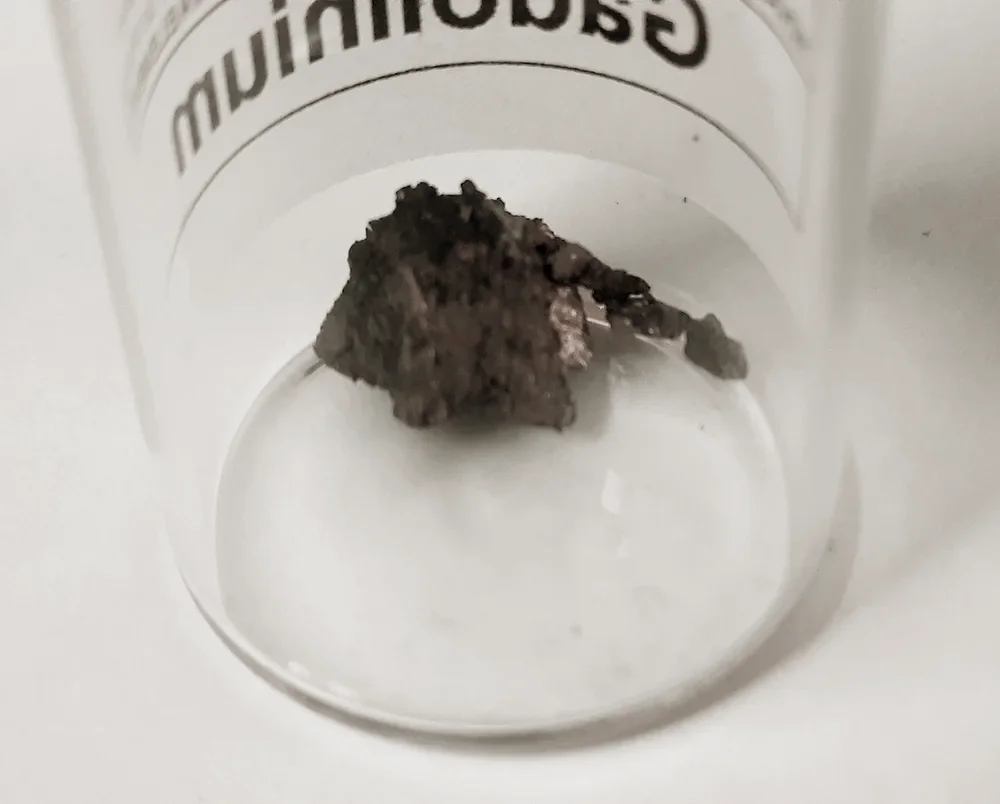
For gadolinium, the most important absorbing isotopes include gadolinium-155 and gadolinium-157. After neutron capture, they become heavier gadolinium isotopes, such as gadolinium-156 and gadolinium-158. These products have a much lower absorption effect compared with the original absorber isotopes.
Absorption is therefore not only a momentary event. It changes the isotopic composition of the material, reduces absorber worth, and reshapes reactivity over time.
That time-dependent change is especially important for burnable absorbers such as gadolinium. Their purpose is not only to absorb neutrons, but to do so in a way that changes as the fuel cycle progresses.
Absorption, in this sense, is part of the reactor’s time structure.
Two absorbers, two different roles
Boron and gadolinium both absorb neutrons, but they do not represent the same control idea.
In the PWR context, boron is connected to coolant chemistry and soluble reactivity control, while gadolinium is connected to fuel design and burnable absorption. Boron can be adjusted through the system during operation. Gadolinium is placed into the core before operation begins, where its role changes as the fuel cycle progresses.
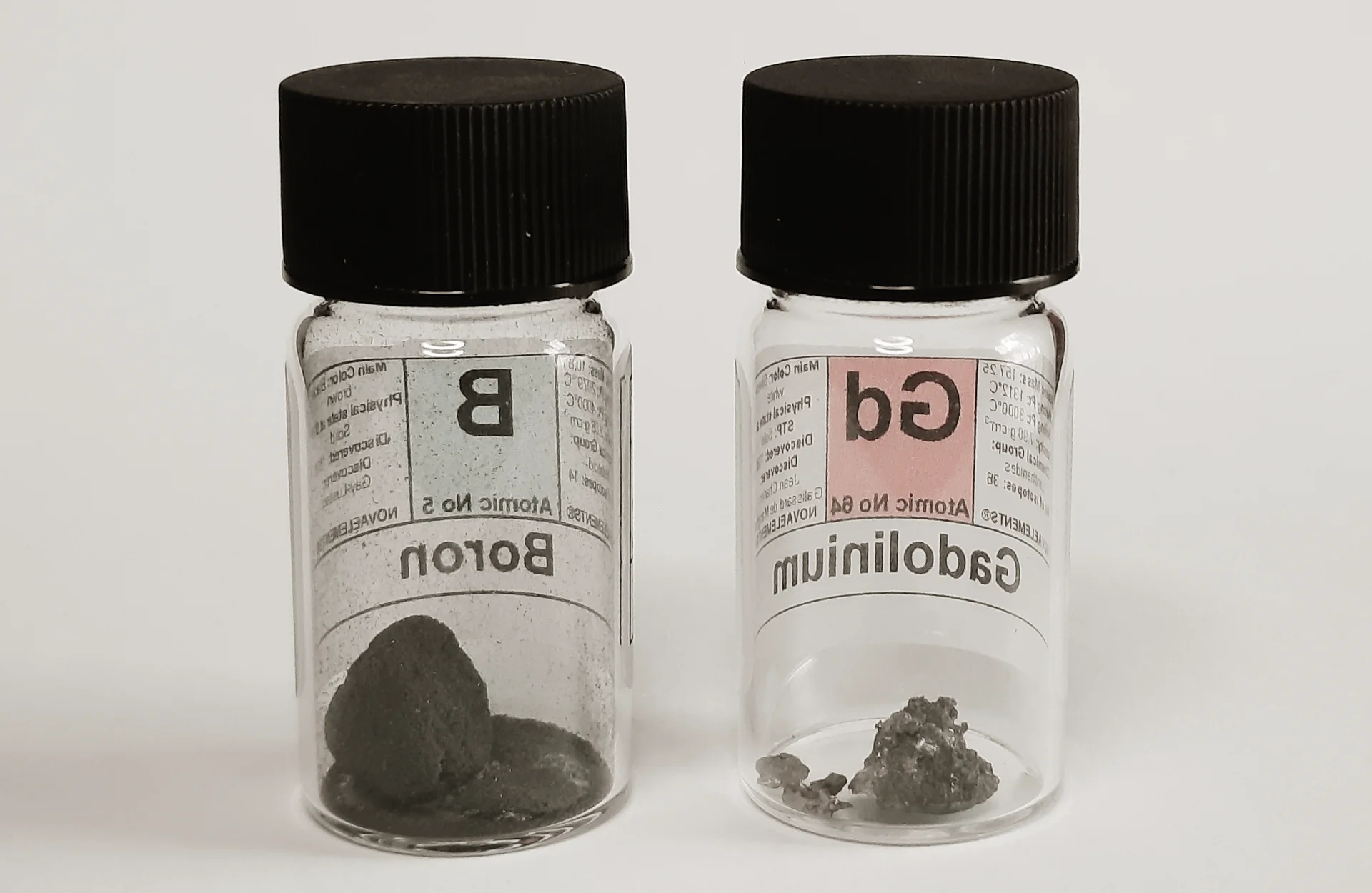
They are used here as visual and educational references for a discussion on neutron absorption, soluble reactivity control, burnable absorbers, and the material logic of reactor control.
This difference matters. One absorber belongs to operational chemistry. The other belongs to core design and fuel behavior over time.
Together, they show why reactor control cannot be reduced to one device, one button, or one dramatic mechanism. A reactor is controlled through layers: mechanical systems, chemical conditions, material choices, procedural discipline, and design decisions made long before operation begins.
This is why nuclear systems require careful communication.
If we only show the large components, we miss the quieter parts of the system that make controlled operation possible.
The quiet materials matter
Boron and gadolinium are not visually spectacular. They do not look like a reactor vessel, a fuel assembly, or a containment building. Their meaning is deeper than their appearance.
They remind us that a reactor is not only a machine made of large components. It is also a carefully balanced neutron environment, shaped by small material choices with large system consequences.
In nuclear systems, importance is not always proportional to size.
A small amount of absorber can influence the behaviour of an entire core. A material placed in the right location can shape power distribution. A concentration in the coolant can affect the neutron population. A design choice made before operation can influence months of reactor behavior.
This is part of the beauty and difficulty of reactor physics. The system is not controlled by force alone. It is controlled through understanding.
A visual reference, not a handling exercise
The boron and gadolinium shown here are sealed material samples, used only as visual and educational references. They are not opened, handled directly, modified, or used experimentally.
That distinction matters.
Technical communication is not only about explaining what a material does. It is also about showing the correct attitude toward materials, systems, and procedures.
A sealed sample can be a powerful educational object, but the way it is presented matters. It should not become theatre, casual handling, or a suggestion that technical materials are toys.
Here, the samples remain what they should be: small objects, treated with respect, used to open a larger discussion about reactor behavior.
Control is a system, not a slogan
When people think about reactor control, they often imagine a control room, control rods, alarms, switches, and operators.
All of that matters. But reactor control begins much earlier and reaches much deeper. It begins in the physics of neutron absorption, continues through material selection, takes shape in core geometry, is influenced by coolant chemistry, and is embedded in fuel design. During operation, it is maintained through procedures, monitoring, and operational discipline.
Boron and gadolinium are small reminders of that larger truth. They do not produce the energy. They help define the conditions under which energy can be produced in a controlled way.
That is why they matter. Not because they are visually impressive or rare objects, but because they point to something essential:
in a nuclear reactor, control is not a single action. It is a layered relationship between physics, materials, design, operation, and time.
Image and material note
All material samples shown are sealed and used for visual and educational reference only. They are not opened, handled directly, modified, or used experimentally.
The samples shown are reference samples. Actual reactor applications involve specific chemical compounds, engineered forms, material specifications, fuel designs, coolant chemistry, licensed procedures, and plant-specific operating limits.
For example, boron in PWR soluble reactivity control is associated with boric acid in the primary coolant. Gadolinium in fuel design is commonly associated with gadolinium oxide incorporated into selected fuel rods.
The samples are visual references for discussion, not representations of direct reactor-ready material forms.
All renders, diagrams, images, and 3D reconstructions published with this article are original visual work by Elite Studio 3D / By the Protocol, unless stated otherwise. They may not be copied, modified, redistributed, commercially used, or used as input for AI-generated derivative works without prior written permission.
A note on scope
This article focuses on two specific reactor-control contexts: boron as soluble reactivity control in pressurized water reactor coolant chemistry, and gadolinium as burnable absorption incorporated into selected fuel rods.
Other absorber materials and applications, including solid boron-containing control rod materials, hafnium, silver-indium-cadmium alloys, CANDU reactivity devices, or absorber behaviour in fast neutron spectra, belong to a wider discussion.
The same basic idea remains important: neutron absorption is not only a material property. Its engineering meaning depends on where the absorber is placed, in what chemical or structural form it exists, what neutron spectrum it operates in, and what system function it supports.
Boric Acid Boron Burnable Absorbers By the Protocol Coolant Chemistry Core Design Fuel Burnup Fuel Design Gadolinium Neutron Absorption Neutron Economy Nuclear Communication nuclear safety Operational Discipline PWR Reactivity Control Reactor Control Reactor Physics Soluble Boron
Last modified: June 4, 2026


