

The protection signal begins the transition
A reactor trip is a rapid shutdown, also referred to as SCRAM. It may be initiated automatically by the reactor protection system or manually. In light water reactors, it is generally achieved by rapidly inserting control or shutdown rods. The absorbers introduce negative reactivity; if the action is successful, the reactor becomes subcritical and fission power decreases rapidly.
The initiation of a trip does not, by itself, mean that a safety limit has already been exceeded. Protection systems are intended to limit deviations in time and mitigate the consequences of events. A trip may occur during an operational disturbance or form part of the response to a serious accident. Its significance therefore depends on the initiating cause and the subsequent course of the event.
A signal calling for protective action does not confirm that the action has succeeded. There is an important distinction between an issued command, the physical response of equipment and the resulting plant state. The crew must verify that reactor power has decreased as required and that the functions needed to maintain shutdown are available. The initial response and its verification may overlap in time.
Why fuel needs cooling after shutdown
Subcriticality means that the fission chain reaction is no longer self-sustaining. It does not mean that all fissions cease at that instant or that the fuel becomes cold. Radioactive nuclides, particularly fission products, continue to decay and release energy. This contribution is known as decay heat.
Decay heat decreases with time, and its magnitude also depends on the reactor’s previous power level and operating history. Knowing that the reactor is shut down is therefore insufficient to assess its cooling requirements. What matters is how much heat is still being generated and how the available systems can remove it.
In addition to the heat still being generated, thermal energy is stored in the fuel, coolant, reactor vessel and other structural components. This energy is also transferred to the surroundings during cooldown. Fission power can decrease very rapidly, while temperatures throughout the system change on a different timescale because of its thermal inertia.
If heat is not removed effectively enough, fuel temperature can rise even in a subcritical reactor. Successful shutdown and assured cooling are therefore related but distinct safety tasks. Low fission power alone does not demonstrate that the fuel is adequately cooled.
The path from the fuel to the ultimate heat sink
Heat removal requires an effective path from the fuel to the environment that receives the heat. In a conventional pressurised water reactor, or PWR, heat may continue to be removed through the steam generators after a trip, provided that primary circuit conditions are suitable and the secondary side is available. The primary coolant takes up heat from the fuel and transfers it through the steam generator tube walls to the water in the secondary circuit.
Depending on equipment conditions, the steam produced may be discharged to the condenser or through designated valves to the atmosphere. This transfers heat out of the reactor coolant system. Maintaining this path requires an adequate water inventory in the steam generators. If main feedwater is unavailable, auxiliary feedwater plays an important role in conventional PWRs.
Coolant circulation may be provided by pumps or, where the design and conditions permit, by natural circulation. Natural circulation also requires suitable physical conditions and an available heat transfer path. Its effectiveness cannot be assumed simply because a pump is not running.
As cooldown continues, the residual heat removal system may take over once its permitted operating conditions have been reached. The choice of path, the conditions for placing it in service and the transition between systems depend on the design and applicable procedures of the individual plant.
Availability of the complete cooling path
A running pump does not, by itself, ensure effective cooling. Flow must follow the appropriate path, heat must be transferred through available heat exchangers, and the ultimate heat sink must be capable of accepting the load. If any of these conditions is not met, information that an individual component is operating may give an incomplete picture of plant conditions.
The assessment must therefore extend beyond the main cooling system. It must also consider the necessary water inventories, electrical power, supporting cooling systems and other systems on which the selected path depends. The specific design determines which of these conditions is decisive. A passive function has different requirements from an active system, but it too depends on defined conditions for successful performance.
The duration of availability also matters. A path that removes heat effectively immediately after a trip does not necessarily provide the same capability several hours later. Available inventories and support functions must be assessed against the expected heat load and the anticipated duration of shutdown. Assessing current cooling thus becomes an assessment of how long it can be sustained.
The plant responds as an interconnected system
A trip changes the balance between heat generation in the reactor and heat removal. If steam demand or turbine status also changes, the secondary side responds. Through the steam generators, these changes are coupled to primary system temperature and pressure. Rapid shutdown is therefore more than a change in rod position: it is a transient involving several interconnected parts of the plant.
Depending on the cause of the event and the design, valve positions, pump operation or the availability of normal operating paths may change. Some equipment responds automatically, some remains in its previous state, and some actions require operator intervention. A trip therefore does not mean that all safety systems actuate. Their initiation is linked to specific conditions.
Monitoring must distinguish expected consequences of shutdown from responses that indicate an additional disturbance. A decrease in a parameter may be expected, but its significance depends on which parameter is changing, how quickly and how it relates to other parameters. Without this context, even numerous individually correct readings do not provide a reliable assessment of plant conditions.
What the crew verifies through measurements
The crew checks whether the available indications confirm the expected response. Information on neutron response and rod position is relevant to assessing shutdown. Pressures, temperatures, levels, flow rates and indications of actual system performance are relevant to assessing cooling. When heat is removed through the steam generators, their water supply, secondary pressure and available steam discharge paths also matter.
The meaning of a measurement must be related to what the instrument actually measures. A valve position indication, a pump running indication and a measured flow rate provide different information. None alone replaces verification that the required effect has been achieved. Similarly, a single level indication in a particular vessel is not a universal measure of whether the water inventory throughout the system is adequate.
When readings do not agree, the discrepancy is itself important information. It must not be overlooked because other displays match expectations. In accordance with procedures, the assessment draws on available independent indications, their limitations and their relationship to the plant response. The purpose of monitoring is to establish whether the safety functions are actually being fulfilled.
Changes over time are part of the information
A single reading shows the measured value at a particular moment. Managing a transient also requires knowledge of the direction and rate of change. A temperature within its permitted limit has a different significance when it is stabilising than when it continues to approach that limit. The same applies to levels and pressures.
Monitoring trends allows expected and actual developments to be compared. After an action, the crew must verify that the intended effect has occurred and remains consistent with other measurements. Assessing plant conditions therefore goes beyond confirming that an action was performed; it also includes evaluating its consequences.
This is also why stability cannot be judged solely from the momentary appearance of the control room or the number of active alarms. During controlled cooldown, parameters may continue to change as intended. The operating objective is a controlled progression within the required conditions, rather than an unchanging value on every display.
Procedures establish priorities
Identifying the initiating cause is important after a trip, but explaining it in detail must not delay the actions needed to maintain safety functions. The crew must assess the actual plant condition even when all causes and relationships are not yet known.
Symptom-based emergency operating procedures therefore guide decisions according to measurable indications and the status of safety functions. Their use does not require the initiating event to have been fully diagnosed. The criteria for action and for transitions between procedures are defined for the particular plant.
Procedures connect information with required actions and checks. Their use includes recognising the relevant condition, monitoring the specified parameters and reassessing the situation after actions have been taken. If conditions change, the prescribed criteria for the subsequent response must be followed. In this way, a trained crew maintains a structured approach even when an event develops differently from the initial expectation.
Crew communication and coordination
Operational discipline is evident in clear task allocation and the exchange of verified information. The crew needs a shared understanding of the key conditions: which function is challenged, what has been done and what response has followed. Information about a deviation must reach the person who needs it for decision making in time to act.
Verifying correct understanding is important when instructions are given verbally. In three-way communication, the sender states the message clearly, the receiver repeats it, and the sender confirms that the repeat-back is correct. This reduces the possibility of an instruction being misheard or misunderstood. After the action, verifying the expected result remains important.
A calm response therefore does not necessarily mean a quiet control room. An event may involve numerous alarms and intensive communication. The quality of the response is reflected in whether information is clear, tasks are coordinated and deviations are addressed. An outward impression of calm cannot replace these criteria.
Operators are part of the response design
The allocation of tasks between automatic systems and people is part of the plant design. Automation allows certain functions to be performed rapidly and simultaneously. Operators integrate information, oversee the response and carry out the tasks assigned to them. This allocation must take account of both human capabilities and limitations and the characteristics of the technical systems.
Displays, the arrangement of information and the accessibility of procedures also matter. The human-system interface must help the crew understand the current condition and recognise significant changes. A reliable response therefore depends on both individual knowledge and the conditions in which that knowledge must be applied.
Simulator training allows this cooperation to be practised during normal operation, transients and accident conditions. Alongside individual actions, crews practise communication, coordination and the use of procedures as a shift team. Reviewing performance after an exercise helps identify what was understood correctly and where improvements are needed.
From a controlled state to a safe state over the long term
Reactivity control, heat removal and the confinement of radioactive material are essential after a trip. During shutdown, this means maintaining subcriticality, providing adequate cooling and preserving the required functions of barriers and associated systems. Bringing the initial transient under control is important, but it does not establish how long those conditions can be maintained.
The IAEA distinguishes between a controlled state and a safe state. In a controlled state, the fundamental safety functions can be ensured for long enough to implement measures to reach a safe state. In a safe state, the reactor is subcritical and the fundamental safety functions are ensured and can be maintained in a stable condition over the long term.
Stabilisation does not necessarily mean an immediate transition to cold shutdown. The target state is determined by the event, system availability, technical constraints and the applicable procedures. Controlled cooldown may form part of the continuing transition, during which the permitted operating conditions of components and systems must be respected.
Monitoring continues after initial stabilisation
Once the initial deviations are under control, the crew’s task changes. Greater emphasis is placed on maintaining the conditions achieved, checking equipment availability and preparing subsequent activities. Decreasing decay heat gradually changes the heat load, but does not, by itself, remove the dependence on effective cooling.
Significant changes in plant conditions and the actions taken must be documented so that the plant configuration remains clearly understood. If work continues into the next shift, the handover must convey the plant condition, limitations and outstanding tasks. The quality of this information also affects the subsequent response.
Returning to power requires a separate decision. After an unplanned shutdown, the cause must be established, the necessary corrective actions completed and the conditions for restart verified. A currently stable state does not mean that these conditions have already been met.
The transition from trip signal to stable state therefore requires more than successful rod insertion. It requires a verified reactor response, effective heat removal that can be sustained, and operational control that detects changes and responds appropriately. These are the specific technical tasks that give continued control after shutdown its meaning.
The rapid shutdown mechanism and guided insertion of absorber rods are discussed in greater detail in SCRAM Is Not Panic.
Note on the cover photograph
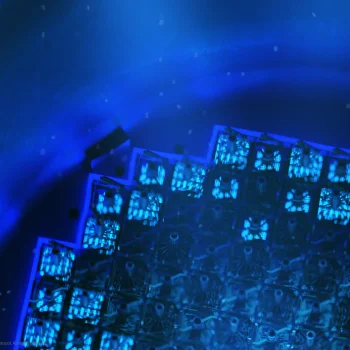
The cover photograph is a licensed iStock image used for illustrative purposes. It does not depict a specific nuclear power plant, its operating crew or a particular procedure.
References
NRC. Scram. Definition of rapid reactor shutdown. Source
IAEA. Safety of Nuclear Power Plants: Design. SSR-2/1 (Rev. 1), 2016. Requirement 4 and the definitions of controlled state and safe state. Source
NRC. NUREG-0933, Task II.F: Instrumentation and Controls: Additional Accident Monitoring Instrumentation. Monitoring safety function performance. Source
U.S. Department of Energy. DOE Fundamentals Handbook: Thermodynamics, Heat Transfer, and Fluid Flow. DOE-HDBK-1012/2-92, 1992, Volume 2, Heat Generation and Decay Heat sections. Source
IAEA. Design of the Reactor Coolant System and Associated Systems for Nuclear Power Plants. SSG-56, 2020, paras 4.13 to 4.17. Source
NRC. Reactor Concepts Manual: Pressurized Water Reactor Systems. Training material on PWR systems and decay heat removal. Source
IAEA. Operational Limits and Conditions and Operating Procedures for Nuclear Power Plants. SSG-70, 2022, Sections 4 and 7, particularly paras 7.14 and 7.20. Source
IAEA. Conduct of Operations at Nuclear Power Plants. SSG-76, 2022, paras 4.48 to 4.56 and 5.48 to 5.52. Communication, records and verification of plant conditions. Source
IAEA. Human Factors Engineering in the Design of Nuclear Power Plants. SSG-51, 2019, Sections 3 and 4. Allocation of functions between people and automation, and interface design. Source
IAEA. Recruitment, Qualification and Training of Personnel for Nuclear Power Plants. SSG-75, paras 4.16 to 4.21. Simulator training and shift team cooperation. Source
NRC. Pressurized Water Reactors. The basic heat transfer path between the primary and secondary circuits. Source
cooling Decay Heat nuclear safety Operational Discipline post-trip response reactor operations reactor protection system reactor shutdown reactor trip SCRAM stable state
Last modified: October 15, 2026