

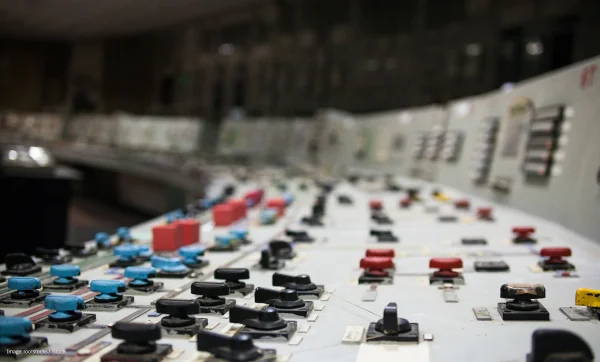
Human Factors in Nuclear Safety

Reliable human performance in a nuclear facility depends on personnel competence, system design and the organization of work. This article explains how human factors engineering supports task feasibility, an understanding of plant conditions and error management, and how lessons from operating experience lead to improvements whose effectiveness is verified.

Read More

Safety by Design

Nuclear safety rests on demonstrating that a plant can fulfil the required safety functions in specified operational states and accident conditions. The assessment connects initiating events, the physical response, equipment failures, support systems and feasible personnel actions.

Read More

In my experience, some of the kindest, most principled people I’ve known were engineers. Their empathy showed through responsibility, precision, and care, not through public emotion.

Nina Lovišček

From Spacer Grid to NuScale SMR Fuel Assembly

The 3D reconstruction of the NuScale SMR 17 × 17 fuel assembly, based on technical documentation, began with the HMP and HTP spacer grids. Their structure raised questions about fuel rod support, coolant flow paths and the connections that bring individual components together into a complete assembly. A comparison with a Westinghouse 17 × 17 reference assembly then showed which features they share and which need to be understood in the context of a specific reactor design.

Read More

Integrity is like a safety protocol, it doesn’t draw attention, it operates quietly in the background, yet it’s what holds the system together. It doesn’t need recognition, but when it fails, the consequences make its absence undeniable.

Nina Lovišček